← Home · Laboratory

Proctor Compaction Testing in Mildura: Optimising Fill Performance for Arid-Climate Projects

Together, we solve the challenges of tomorrow.

LEARN MORE →

The soil profile beneath a project site in Mildura can vary dramatically across a few hundred metres. A residential subdivision near the Murray River floodplain often encounters layered silts and clays with higher natural moisture, while a commercial development out toward the Red Cliffs corridor sits on wind-deposited Mallee sand that drains almost too quickly and resists uniform compaction. These contrasts mean a standardised fill specification rarely holds up without local calibration. The Proctor test measures the relationship between moisture content and dry density for a specific material, giving earthworks supervisors a realistic target density rather than a generic number pulled from a textbook. When a contractor on Benetook Avenue places fill for a warehouse slab, the difference between 95% and 98% relative compaction can determine whether the floor stays crack-free through five Mildura summers. We combine laboratory compaction curves with field density checks using the sand cone method to verify that each lift actually meets the specified value, closing the loop between lab optimum and site reality.

A one-percent shift in placement moisture can erase 3% of relative density in Mallee silty sand: the Proctor curve defines the margin.

Methodology and scope

In Mildura, we frequently see imported quarry blends that arrive on site with a moisture content already three or four points above optimum, particularly during the humid weeks of late summer when irrigation can raise the water table in low-lying areas near the river. A Proctor test run on a split sample at the time of delivery tells the superintendent whether the material needs drying back or can go straight to the pad. The standard compactive effort (AS 1289.5.1.1) applies a 2.7 kg hammer dropped 300 mm across three layers, replicating the energy delivered by a smooth-drum roller making four to six passes on a 200 mm lift. Modified Proctor (AS 1289.5.2.1) uses a 4.9 kg hammer with a 450 mm drop over five layers, simulating heavier compaction plant or deep-lift placement. For a council road reconstruction along Deakin Avenue, the modified test often governs the crushed rock basecourse, pushing the maximum dry density roughly 8–12% higher than the standard curve and shifting the optimum moisture content downward. Contractors working on compacted clay liners for stormwater basins in Mildura’s new industrial estates need both curves to satisfy EPA requirements, and the lab report includes the zero-air-voids line plotted against the compaction curve so the engineer can spot oversaturation at a glance. Understanding the particle size distribution of the fill—something we address through grain size analysis—helps predict whether the Proctor curve will be sharp (typical of clean sands) or flat (common in clayey Mallee loams), which directly affects the tolerance window for moisture on site.
Proctor Compaction Testing in Mildura: Optimising Fill Performance for Arid-Climate Projects
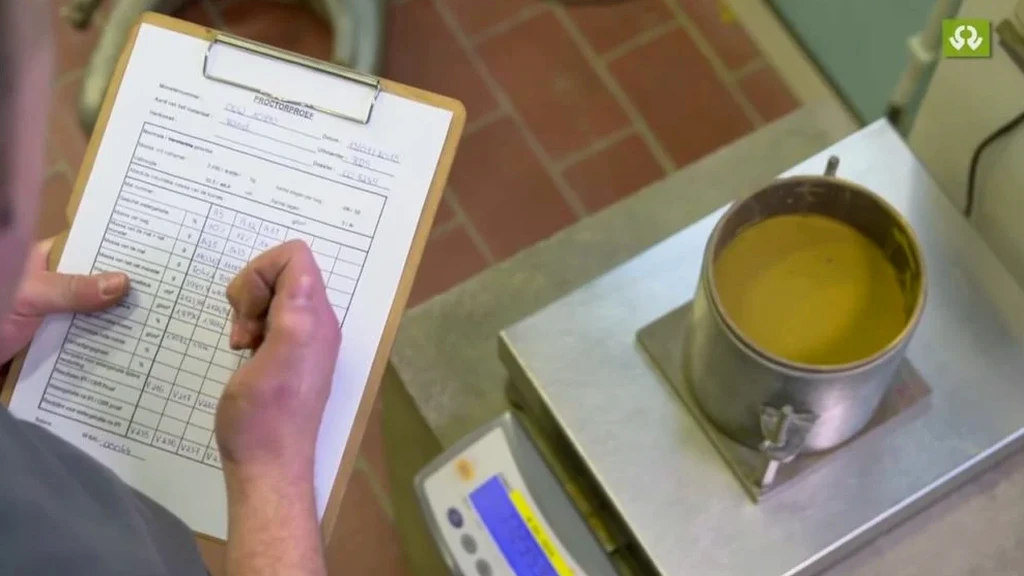
Technical reference image — Mildura

Local considerations

AS 3798 (Earthworks) and AS 1289 set the framework for compaction acceptance in Victoria, but Mildura’s semi-arid climate introduces a risk that wetter regions rarely face: rapid surface evaporation after watering. A pad scarified and moisture-conditioned to near-optimum at 7:00 a.m. can lose 2–3% moisture by midday when the ambient temperature climbs past 38°C and relative humidity drops below 15%. The Proctor curve establishes the relationship, but if the site team does not account for evaporative loss, the placed fill will test low on density and require re-rolling—costing hours and water in a region where both are expensive. Overcompaction is another failure mode: passing a padfoot roller over a silty sand at moisture above optimum can generate pore pressures that shear the soil internally, producing a “rubbery” surface that never reaches specified density. The lab report flags the saturation line and the shape of the curve so the field engineer can recognise when the material is approaching the unstable zone. On deep fill projects—common in Mildura’s expanding residential subdivisions where lots are benched into undulating dune terrain—a single Proctor reference for the entire site is insufficient; we recommend testing each major material type encountered, and linking the compaction specification to a site investigation with test pits that map the lateral extent of borrow sources.

Need a geotechnical assessment?

Reply within 24h.

Email: contact@geotechnicalengineering1.co

Technical parameters

ParameterTypical value
Standard compactive effort (AS 1289.5.1.1)596 kJ/m³; 2.7 kg hammer, 300 mm drop, 3 layers × 25 blows
Modified compactive effort (AS 1289.5.2.1)2703 kJ/m³; 4.9 kg hammer, 450 mm drop, 5 layers × 25 blows
Mould volume (standard)1000 cm³ (150 mm diameter) or 2250 cm³ for oversize correction
Oversize particle thresholdRetained on 19.0 mm sieve; AS 1289.5.4.1 correction applied for >5% oversize
Typical MDD range (Mildura sand)1.78–1.92 t/m³ (standard); 1.92–2.05 t/m³ (modified)
Optimum moisture range (Mallee clayey sand)10–14% (standard); 8–11% (modified)
Sample mass required (lab)25–35 kg for standard plus modified on one material; 15 kg for repeat check
Turnaround (NATA-accredited lab)24–48 hours after sample receipt; same-day available for urgent pours

Associated technical services

01

Laboratory Proctor Determination (Standard and Modified)

We run the full AS 1289.5.1.1 or 5.2.1 procedure on bulk samples collected from your site or borrow pit. The report delivers the maximum dry density, optimum moisture content, and the full compaction curve with the air-voids line, plus oversize correction where required. Multiple-point curves (five moisture contents minimum) give better resolution than three-point quick checks and are standard for all Mildura commercial projects.

02

Field Density Correlation and Nuclear Gauge Benchmarking

A Proctor number only works when the field test references it correctly. We pair laboratory compaction curves with sand-cone density tests on-site to benchmark nuclear gauges against the same material, calibrating the gauge to the Proctor family of curves so that daily compaction QA reflects the actual fill rather than a factory default. This service is particularly valuable on Mildura infrastructure jobs where VicRoads specification requires sand-cone verification at the start of each new material run.

Applicable standards

AS 1289.5.1.1 – Soil compaction and density tests: Determination of the dry density/moisture content relation of a soil using standard compactive effort, AS 1289.5.2.1 – Determination of the dry density/moisture content relation of a soil using modified compactive effort, AS 1289.5.4.1 – Compaction control test: Dry density ratio, moisture variation and moisture ratio, AS 3798 – Guidelines on earthworks for commercial and residential developments

Frequently asked questions

How much does a Proctor compaction test cost for a residential slab in Mildura?

For a single material source tested at standard compactive effort, laboratory Proctor testing typically falls between AU$160 and AU$220. A combined standard-plus-modified package on the same sample generally ranges from AU$240 to AU$300. Field density correlation visits are quoted separately based on the number of test locations and travel distance within the Mildura area.

How many Proctor tests does a typical Mildura house block need?

Most residential projects require at least one Proctor test per distinct fill material. If the builder is importing controlled fill from a single quarry, one standard Proctor may suffice. However, if site-won material from different depths or borrow areas is being re-used—common on sloping blocks in the Mildura Golf Course estate or near the river—each visually distinct soil should be characterised with its own compaction curve to avoid failing field density tests later.

What is the difference between standard and modified Proctor for a driveway base?

Standard Proctor simulates the compaction energy of lighter rollers on thin lifts, while modified Proctor replicates the higher energy of heavy vibratory rollers or deep-lift placement. For a residential driveway using crushed rock basecourse in Mildura, the council or structural engineer will normally specify a relative compaction of 98% or 100% of modified maximum dry density, because the modified curve produces a higher reference density and a tighter acceptance window. Standard Proctor is more common for general fill under lawns or landscaping.

How long does it take to get Proctor test results in Mildura?

Standard turnaround is 48 hours from sample receipt at our NATA-accredited laboratory. We offer a 24-hour priority service for urgent situations such as a concrete pour scheduled the following day. The test itself requires oven-drying moisture content determinations overnight, so same-day results are only feasible if the sample arrives before 9:00 a.m. and the drying cycle can be accelerated without compromising accuracy.
Location and service area

We serve projects across Mildura and surrounding areas.

View larger map