Mildura sits on the Murray River floodplain, where the soil profile alternates between stiff Coonambidgal clays and loose, water-bearing Parilla Sands. A standard bearing capacity assumption can fail badly here when the water table is less than two metres below the surface. Our soil mechanics study quantifies effective stress parameters, consolidation rates, and undrained shear strength under saturated conditions. The lab program follows AS 1726, running triaxial tests on undisturbed Shelby tube samples to separate apparent cohesion from true friction angle. For commercial foundations near the riverbank, we cross-check results with in-situ permeability data to model pore pressure dissipation during staged loading.
Effective stress parameters from Mildura alluvial clays can drop 30% from drained to undrained loading — a single triaxial stage is not enough.
Site-specific factors
A five-storey apartment block off Deakin Avenue went to tender with foundation drawings based on a single borehole and generic SPT N-values. The contractor priced a stiffened raft, but the soil mechanics study later revealed a six-metre band of normally consolidated clay with Cc over 0.35. Total settlement recalculated at 65 millimetres, differential at 20. The design had to switch to piled footings socketed into the Parilla Sands, adding eight weeks and a six-figure variation. Mildura's floodplain stratigraphy changes abruptly, and the Coonambidgal clay can be underconsolidated where the river has shifted course historically. Without a multi-point consolidation and triaxial program, settlement predictions are guesswork, and post-construction cracking in the superstructure becomes almost inevitable.
Quick answers
How long does a soil mechanics study take in Mildura?
From drilling to final report, allow three to four weeks. Undisturbed sampling on the floodplain takes one or two days depending on borehole depth. Consolidation and triaxial stages run in parallel in the lab, typically ten to fourteen working days. Interpretation and reporting add another week.
What parameters do structural engineers actually need from the study?
At a minimum: effective friction angle phi-prime, effective cohesion c-prime, undrained shear strength Su, constrained modulus D or oedometric modulus Eoed, coefficient of consolidation Cv, and preconsolidation pressure. For retaining wall design we also provide the drained Poisson ratio and the soil-wall interface friction angle.
How much does a Mildura soil mechanics study cost?
Can you test the Parilla Sands in a triaxial cell?
The Parilla Sands are usually too loose to sample undisturbed with a Shelby tube, but we can reconstitute specimens to field density from split-spoon samples and run CID triaxial or direct shear tests. We also run particle size distribution and minimum/maximum density to classify the sand for liquefaction screening.
Do you need a drilling rig or just a hand auger?
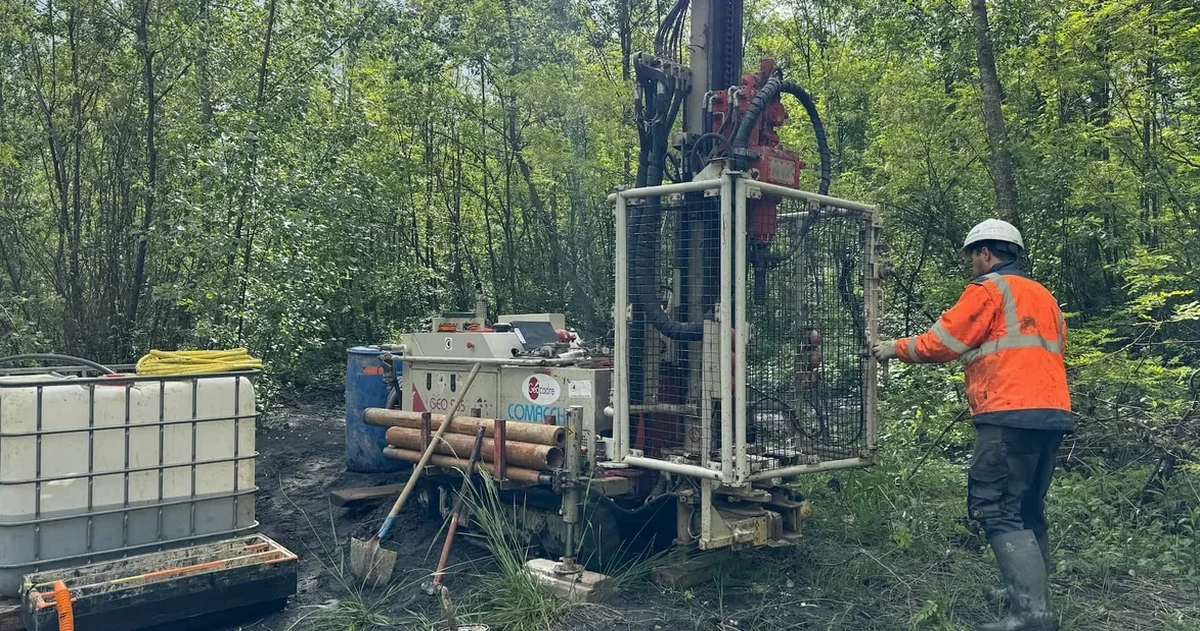
For a soil mechanics study that requires undisturbed samples below two metres, a truck-mounted or track-mounted drilling rig with Shelby tube capability is essential. Hand augers disturb the sample too much for triaxial testing. In Mildura's clay, we typically push 73-millimetre thin-wall tubes to six or eight metres depth.