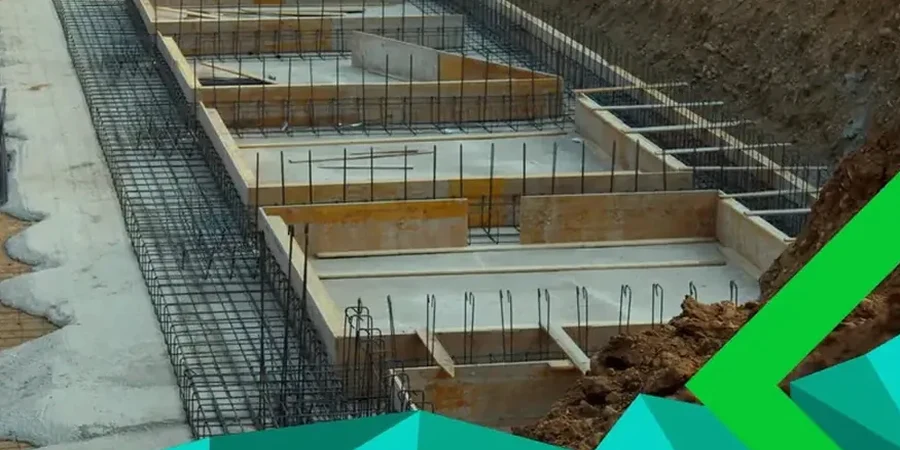
Foundations form the literal bedrock of any construction project, and in Mildura, their importance is amplified by the region's unique environmental and geological conditions. This category encompasses the complete suite of services required to design, test, and construct the substructure that transfers building loads safely to the ground. From initial site investigations and soil testing to the engineering design of deep and shallow systems, a robust foundation strategy is non-negotiable. In a city experiencing steady growth along the Murray River, ensuring structural integrity from the ground up is critical for the longevity of residential, commercial, and infrastructure developments. Understanding local ground behaviour is the first step in mitigating risks like differential settlement, which can be particularly prevalent in the area's reactive clay soils.
The geology of Mildura presents a landscape dominated by the Murray Basin's sedimentary layers, overlaying ancient marine deposits. The surface is largely characterised by alluvial soils from the Murray River floodplain, rich in silts and expansive clays. These reactive soils are the primary geotechnical challenge; they undergo significant volume changes with seasonal moisture fluctuations, swelling when wet and shrinking during the characteristic dry, hot summers. This ground movement can exert immense pressure on inadequately designed footings, leading to cracking and structural damage. Deeper strata can include calcrete layers and the Loxton-Parilla Sands, which provide more competent bearing material but require careful investigation to map their depth and consistency. Consequently, a comprehensive understanding of soil reactivity, as classified by AS 2870, is not just academic but a practical necessity for any project.
All foundation work in Mildura is governed by the National Construction Code (NCC) and must adhere strictly to the relevant Australian Standards. The primary standard is AS 2870: Residential slabs and footings, which classifies sites based on soil reactivity and provides deemed-to-comply designs for typical houses. For more complex or non-standard projects, a performance-based design is required, relying on the principles of AS 2159 for piling and AS 3600 for concrete structures. Geotechnical site investigations must be conducted in accordance with AS 1726, providing the essential data on soil strength, bearing capacity, and reactivity. These national standards are enforced through local building permits, ensuring that every foundation, from a simple house slab to a deep pile foundation design, meets the rigorous safety and serviceability criteria designed to withstand local conditions.
The demand for specialised foundation services in Mildura spans a wide array of project types. A standard residential build on a moderately reactive clay site might only require a stiffened raft slab with carefully engineered beam depths, a service often covered under residential slab design. However, the increasing construction of multi-storey commercial buildings, apartment complexes, and critical infrastructure like bridges and water towers necessitates deep foundation solutions. For these structures, pile foundation design becomes essential, transferring loads through the unstable surface clays to the more reliable sands or rock strata below. Even extensions and renovations to existing homes often require a forensic assessment of the original footings and tailored underpinning solutions to ensure the new works integrate safely without causing differential movement.
The most common indicators are directly linked to the region's reactive clays. Look for diagonal cracking around doors and windows, which often widens seasonally. Sticking doors and windows, noticeably uneven or sloping floors, and visible gaps between the wall and ceiling cornice are also key signs. Externally, cracking in the brickwork or mortar, especially on a stepped pattern following the brick joints, is a classic symptom of differential soil movement beneath the footing.
A soil test is not just a recommendation but a mandatory requirement under the National Construction Code and AS 2870. It is the only way to accurately classify the site's soil reactivity, which dictates the type and depth of foundation required. In Mildura, where soil conditions can change dramatically over a short distance, a site-specific investigation identifies the presence of expansive clays, fill material, or varying water tables, providing the essential bearing capacity and movement parameters an engineer needs for a safe design.
The choice fundamentally changes the load path and the foundation's interaction with reactive soil. A slab-on-ground, typically a stiffened raft, is designed to move with the soil as a monolithic unit, requiring deep edge and internal beams for rigidity. A suspended floor, usually supported on piers or piles, elevates the structure above the ground, isolating it from surface soil movement. This necessitates a deep foundation design, such as screw piles or bored piers, founded in stable strata, which is a more complex but effective solution for highly reactive sites.
A foundation designed and constructed in strict accordance with AS 2870 or AS 2159, based on a thorough geotechnical investigation, has a design life that matches the building's intended service life, typically 50 years or more for residential structures. The key is 'properly engineered'—meaning the design has accurately accounted for the site's specific soil reactivity, drainage conditions, and structural loads. Neglecting these factors can reduce a foundation's functional life to just a few years before significant distress appears.