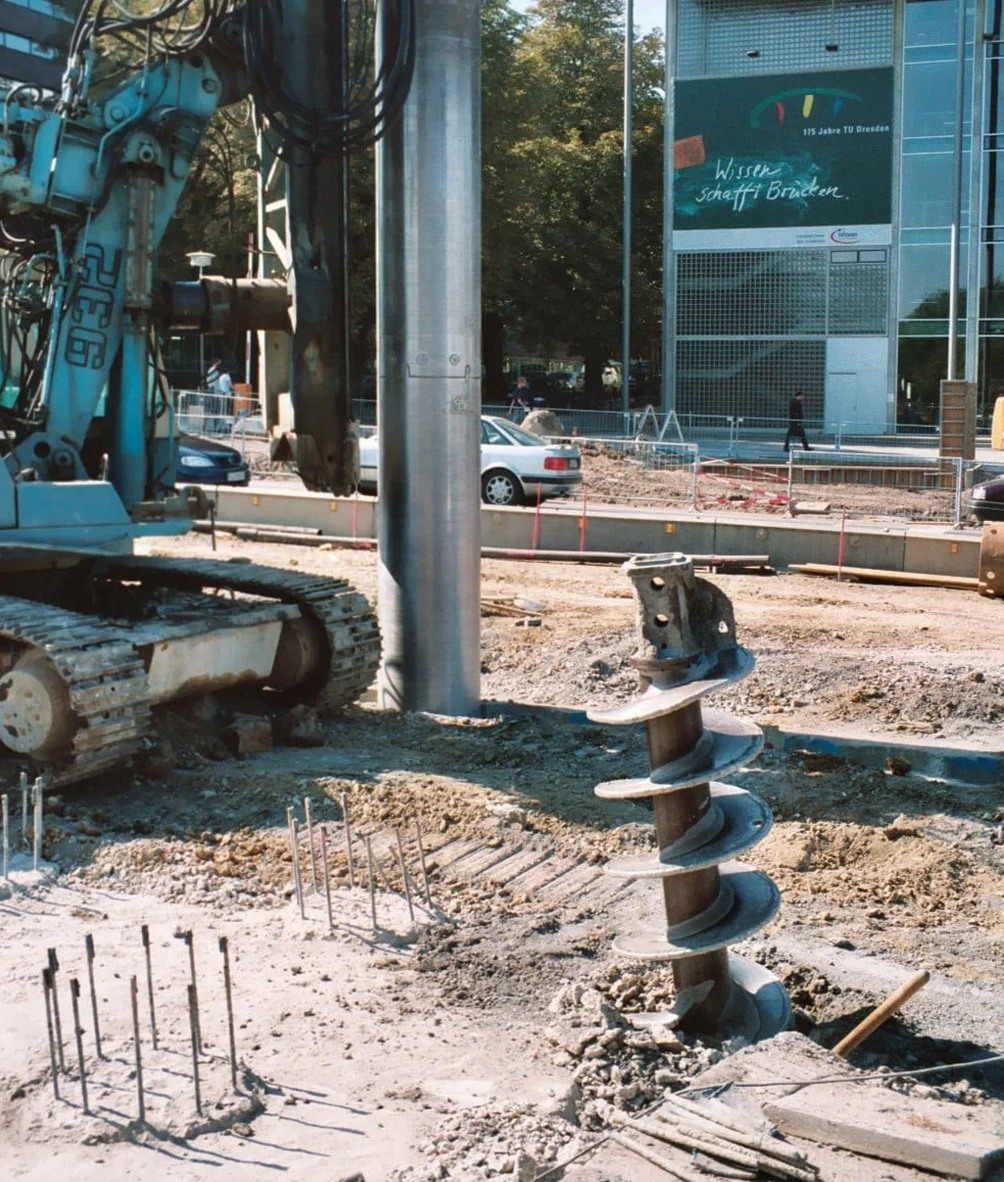
A common misstep in the Sunraysia region is assuming that the stiff surface clays near Mildura provide uniform bearing capacity at depth. This assumption fails when boreholes reveal loose paleochannel sands or desiccated layers extending three to four metres below ground level. The result is differential settlement that can crack a slab within two dry seasons. A proper pile foundation design transfers structural loads past the active moisture zone into competent strata, typically the older Tertiary sediments that underlie much of the Murray River corridor. Our technical group runs site-specific geotechnical models that combine CPT testing data with borehole logs, ensuring the pile type, diameter, and toe level match the actual stratigraphy rather than a generic regional profile. This approach has proven itself across residential, commercial, and agricultural processing facilities throughout the Mildura area.
A pile design based on Mildura-specific stratigraphy can reduce the number of piles by fifteen percent compared with a conservative desktop assumption, while still meeting AS 2159 serviceability limits.
Quick answers
What depth of soil investigation is needed for pile design in Mildura?
AS 1726 specifies investigation depth to at least three pile diameters below the anticipated toe level, or until a competent stratum is proven for two consecutive metres. In the Mildura area, this often means drilling to 15–22 metres to penetrate the full Quaternary sequence and confirm the Parilla Sand or equivalent dense material. We typically specify rotary mud drilling with SPT sampling at 1.5-metre intervals through the pile zone.
How much does a pile foundation design cost for a Mildura project?
Which Australian standards govern pile design on the Murray River floodplain?
AS 2159-2009 is the primary code for piling design and installation. It works alongside AS 1726 for site investigation, AS 4678 for earth pressures on pile-supported retaining elements, and AS/NZS 1170 for wind and seismic actions. Our designs also reference the 2018 revision of AS 3600 for reinforced concrete pile structural checks.
What is the typical turnaround time from investigation to final design?
A standard single-dwelling project in Mildura takes roughly two to three weeks from completion of site drilling to delivery of the signed design report. This includes laboratory testing of soil samples, parameter selection, capacity calculations, and a review cycle with the structural engineer. Larger commercial jobs with multiple pile groups may extend to four or five weeks depending on the testing programme.